


Buying a home is one of the most significant financial and lifestyle decisions a person can make. While factors such as price, size, design, and amenities remain important, today’s homebuyers are increasingly looking beyond the property itself. The quality of the surrounding neighbourhood and access to essential facilities can significantly influence everyday living.
This is where social infrastructure becomes an important consideration. Access to schools, healthcare facilities, markets, retail destinations, parks, and recreational spaces can contribute to the convenience and liveability of a residential location.
In Kolkata, homebuyers are also paying greater attention to connectivity and the development of surrounding infrastructure as established neighbourhoods evolve and new residential areas emerge. Developers such as Realtech Nirman have been part of this evolving residential landscape, with projects such as RaajKutir and Rajkunj reflecting the growing importance of well-planned residential environments.
How Does Social Infrastructure Influence Homebuying Decisions in Kolkata?
Social infrastructure can have a direct impact on the everyday experience of living in a neighbourhood. When evaluating a home, buyers increasingly consider not only the property’s features but also the availability of essential facilities in the surrounding area.
For families with children, proximity to schools and educational institutions can be an important consideration. Convenient access can reduce daily travel requirements and make school routines easier to manage.
Healthcare access is another important factor. Having hospitals, clinics, pharmacies, and other medical facilities within convenient reach can add to the practicality of a residential location.
Retail and everyday conveniences also contribute to the appeal of a neighbourhood. Access to local markets, supermarkets, shopping destinations, restaurants, and other services can make daily life easier by reducing the need to travel long distances for routine requirements.
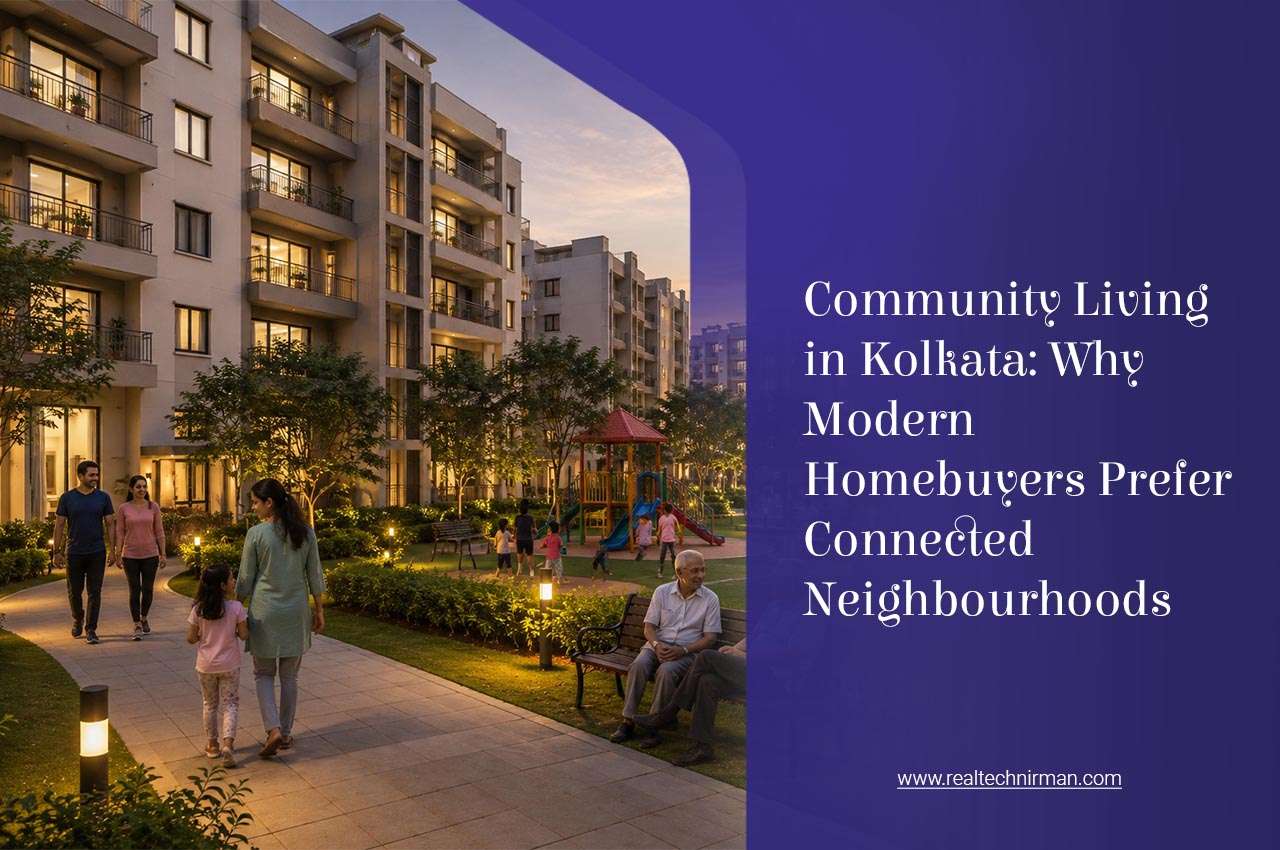
Similarly, parks, walking areas, playgrounds, and recreational facilities can contribute to the overall residential experience by providing spaces for exercise, leisure, and social interaction.
For homebuyers, this means that the location of a property should be evaluated as carefully as the property itself. A well-designed home may offer attractive interiors and amenities, but the quality of the surrounding infrastructure can significantly influence how convenient and comfortable everyday life becomes.
What Social Infrastructure Should Homebuyers Look For?
The importance of individual facilities will vary depending on a buyer’s lifestyle, family requirements, and priorities. However, a well-developed residential ecosystem generally provides convenient access to several everyday requirements.
Educational institutions are particularly relevant for families, while proximity to healthcare can be valuable across age groups. Markets, supermarkets, retail destinations, and dining options can support everyday convenience, while parks and recreational spaces can contribute to a more balanced residential environment.
The quality and availability of social infrastructure can also change as neighbourhoods develop. This makes it important to evaluate both the existing facilities in an area and credible future developments that may influence the location over time.
Residential developments by Realtech Nirman can be considered within this broader context, where the location surrounding a home forms an important part of the overall residential experience. For buyers considering developments such as RaajKutir or Rajkunj, understanding the surrounding neighbourhood and its access to everyday facilities can help provide a more complete picture of the location.
Why Should Connectivity Be Evaluated Alongside Social Infrastructure?
Connectivity is closely linked to the overall convenience of a residential location. While roads, metro networks, and public transport are generally considered part of transport infrastructure rather than social infrastructure, they determine how easily residents can access workplaces, schools, hospitals, commercial districts, and recreational destinations.
Good connectivity can help make everyday travel more convenient, particularly for professionals commuting to major employment and business districts. It can also improve access to essential facilities that may not be located within the immediate neighbourhood.
In Kolkata, continuing improvements to road and metro connectivity are influencing how homebuyers evaluate both established and emerging residential locations. Areas such as Rajarhat and New Town, for example, have developed alongside expanding residential, commercial, institutional, and supporting infrastructure.
However, connectivity should not be assessed solely on the basis of proximity to a metro station or major road. Homebuyers should consider how effectively the location connects them to the places they are likely to visit regularly, including workplaces, schools, healthcare facilities, shopping areas, and other parts of the city.
Connectivity and social infrastructure should therefore be evaluated together. A location that combines access to essential facilities with convenient transport connections can provide a more complete residential environment.
How Does Social Infrastructure Influence Emerging Residential Areas?
Social infrastructure can be particularly important when evaluating developing residential locations.
New residential areas may offer modern housing, larger developments, and new amenities, but the surrounding neighbourhood can take time to mature. The availability of schools, healthcare, retail, recreation, and everyday services can therefore influence how convenient such locations are for residents.
As an area develops and more facilities become operational, its overall residential appeal may increase. However, buyers should distinguish between infrastructure that is already available and facilities that have merely been announced or proposed.
This is especially important when evaluating a home based on future development plans. Proposed roads, metro connectivity, schools, hospitals, or commercial developments may add to the future potential of a location, but buyers should verify project status, timelines, and official information rather than assuming that every proposed development will be completed as planned.
Why Does the Surrounding Neighbourhood Matter as Much as the Home?
A home is experienced not only within its walls but also through the neighbourhood around it.
Daily routines often involve travelling to work, taking children to school, buying groceries, visiting healthcare facilities, exercising, dining out, or accessing public transport. The time and effort required for these activities can have a meaningful impact on everyday life.
This is why homebuyers increasingly evaluate the broader residential ecosystem rather than considering a property in isolation. The right location will differ from one buyer to another, but convenient access to the facilities that matter most to a household can contribute significantly to long-term residential satisfaction. The approach is also relevant to residential developments by Realtech Nirman, where the overall location and surrounding environment form an important part of the homebuying consideration.
Final Thoughts
Homebuying decisions require a broader perspective than evaluating the property alone. Along with price, floor plan, design, and amenities, buyers should consider the neighbourhood, surrounding social infrastructure, and connectivity.
Access to schools, healthcare facilities, markets, retail destinations, parks, recreational spaces, and everyday services can influence the convenience and liveability of a location. Transport connectivity further determines how easily residents can reach workplaces and other important destinations across the city.
This is particularly relevant in a city like Kolkata, where established neighbourhoods coexist with emerging residential corridors such as Rajarhat and New Town. As the city continues to evolve, the quality of both completed and developing infrastructure will remain an important consideration for homebuyers.
Ultimately, the ideal home is not defined only by its interiors, floor plan, or amenities. What surrounds the home matters too. Strong social infrastructure, practical connectivity, and convenient access to everyday facilities can help create a more comfortable and well-connected lifestyle.
FAQs
Q. Does social infrastructure affect property value?
Answer: Yes, strong social infrastructure can improve the desirability of a neighbourhood and contribute to its long-term residential and investment appeal.
Q. What should homebuyers check before purchasing a property in Kolkata?
Answer: Homebuyers should evaluate connectivity, nearby schools, hospitals, markets, public transport, recreational facilities and the area’s future development potential.
Q. How does social infrastructure improve the quality of life?
Answer: Access to essential facilities nearby makes daily activities more convenient, reduces travel requirements and supports a comfortable lifestyle.
Q. Why is social infrastructure important in emerging areas of Kolkata?
Answer: Strong social infrastructure can make developing neighbourhoods more liveable and accessible, increasing their appeal among modern homebuyers.
Q. Can social infrastructure influence future property demand?
Answer: Yes, well-developed infrastructure and connectivity can make a locality more desirable, potentially supporting sustained residential demand.
Q. Should homebuyers consider future infrastructure development?
Answer: Yes, homebuyers can consider planned infrastructure, but they should also verify which facilities are currently operational before making homebuying decisions.